

|

|
|
||
|
|
The increasing scarcity of
resources, the rise in the planet's average temperature and
pollution are all causes for concern. Because we care about the
environment, we've put together this section to remind you of a
few simple things you can do to help protect it :
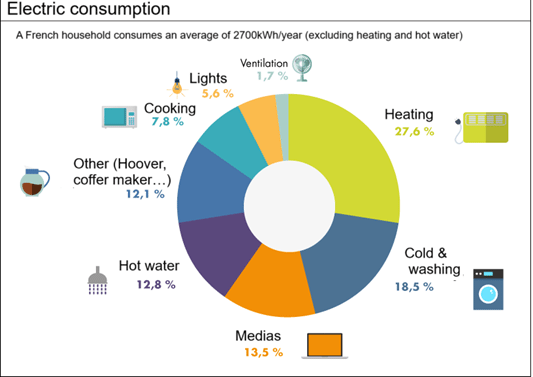
Electricity...
I
opt for natural light for lighting.
If artificial light is necessary,
I turn off the light when I leave the room as well as any
outside light as soon as I no longer need it.
I don't keep any appliances on
standby. I always switch off the television, radio, household
appliances, computer and games consoles when I'm not using them.
On standby, an appliance can consume up to 30% of energy.
In the bathroom, I remember to
turn off the towel warmer as soon as I've finished using it.
Gas heating and cooking...
In the kitchen, I put a lid on my saucepans. Keeping 1.5 litres of water boiling requires 4 times less energy with a lid.
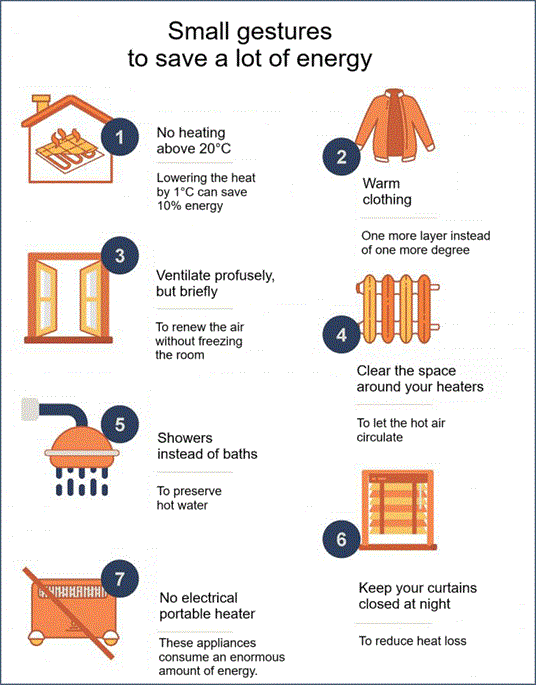
I adapt the temperature according to the room. In winter, I aim for 19°C in the kitchen and living room, 18°C in the bedrooms.
I close the
blinds and curtains every evening in winter, to prevent
significant heat loss.
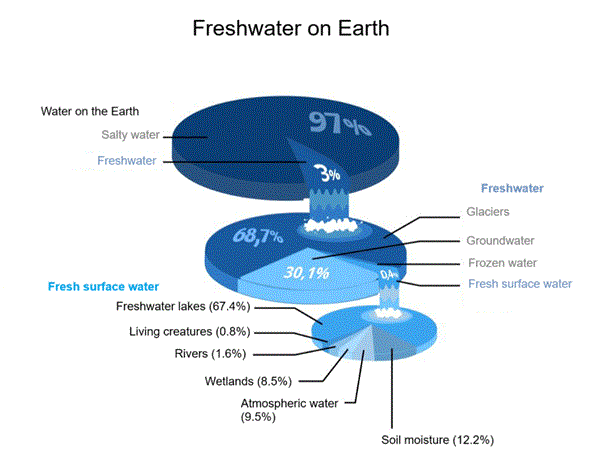
Water...
I turn off the water when I brush
my teeth and shave: 15 litres of water run from the tap in a
minute.
Selective sorting...
Waste sorting is an essential part
of our daily lives, not only to recover waste and give it a
second life, but also to limit the amount of waste that goes to
landfill or is incinerated.
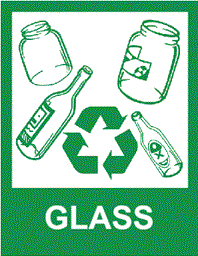
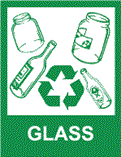
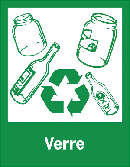
Glass :
Empty and uncapped glass jars and
bottles
Do not put light bulbs, mirrors or crockery.
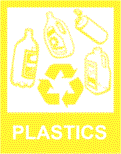
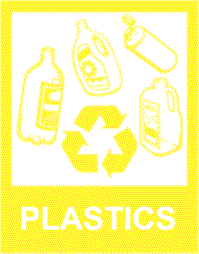
Plastics :
Yoghurt or
cream pots, plastic trays, polystyrene, blister packs, tubes,
plastic nets, plastic bottles and flasks, plastic bags and
films, metal packaging (cans, tins, empty aerosols...), food
cartons (soup, fruit juice...)
Do not stack bottles, make sure they are empty before leaving them in the bin.
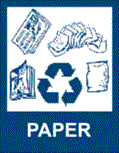
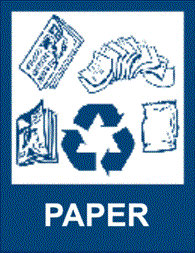
Paper and cardboard :
Magazines, leaflets, newspapers,
sheets, letters, envelopes, cardboard packaging (even slightly
soiled)
Do not put gift wrap, tissues, kitchen paper, aluminium foil in that bin.
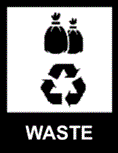
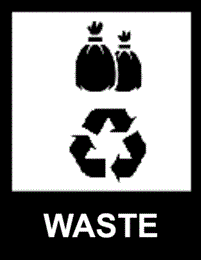
Final Waste :
Non-residual
household waste that will be buried or incinerated, i.e. all
waste that cannot be recycled.
All waste must be placed in a bin bag.
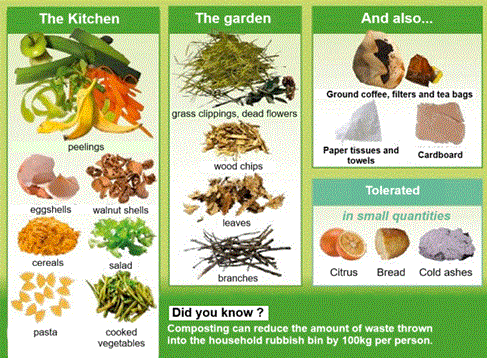
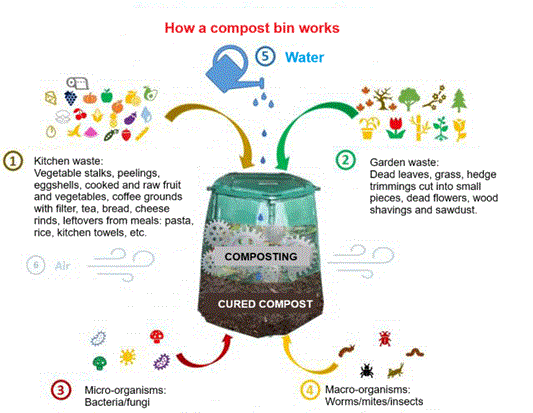
Organic waste composteur :
The
composter helps reducing the amount of waste thrown away. It
also produces a high-quality compost that helps to balance the
soil.
Do
not put bread, biscuits, oil, sauces, biodegradable plastic,
leftover cooked meals, leftover meat and fish, etc. in the
composter.
© Gîte Le Suroît - 2024 - All rights reserved
|
|